
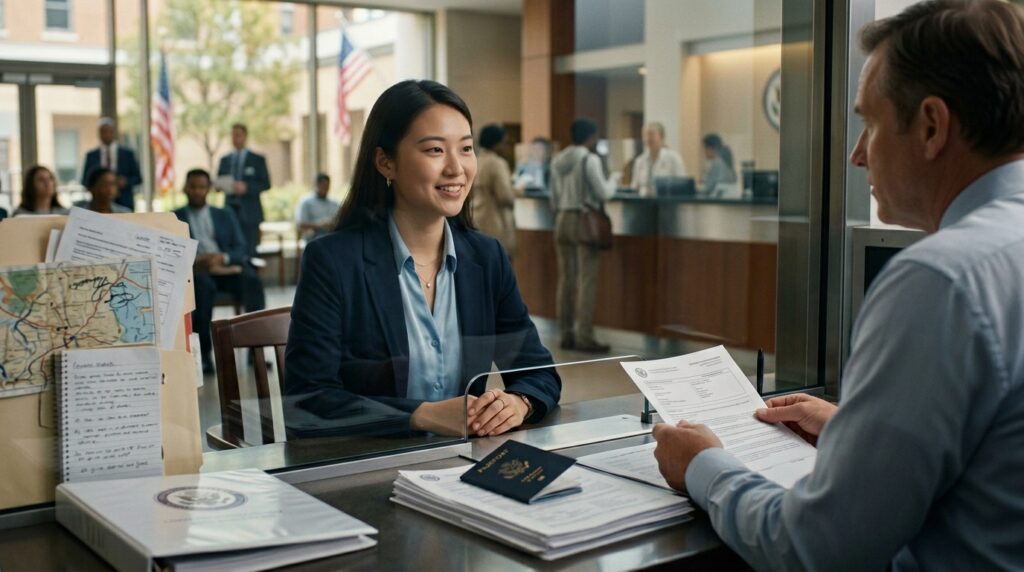
Imagine preparing for weeks, gathering every document for your student visa application… only to be rejected in a single sentence. It sucks. You were convinced you were almost at the finish line, only to be rejected for reasons you are not aware of. That’s why preparation is everything. But what are some common reasons students get their visas denied, and how can you prevent them?
The truth behind most student visa rejections is not random. They happen for specific and avoidable reasons, and understanding these reasons as to how to avoid them can make a great difference between approval and rejection. The following are factors for rejection for you to keep in mind prior to getting a US student visa.
1. Incomplete or Incorrect Documentation
An incomplete application or inconsistent documentation can hurt your chances from the start. Even little discrepancies in your name, dates, or other details can cause suspicion. In some cases, the consular officer may request additional documents instead of denying the application immediately. However, this can still cause delays, so it’s better to have all your documents complete and accurate from the beginning.
According to the US Department of State, you are responsible for providing complete and correct documentation. Inaccurate or incomplete information can affect the visa decision.
Example: Your bank statement lists your name slightly differently than your passport.
How to prevent: Review your documentation twice by following a checklist of needed documents. Make sure names, dates and details line up.
2. Insufficient Financial Documentation
Officers want to make sure you can support yourself while in the US. The US Department of State advises that applicants must provide evidence of enough funds to pay for tuition and living expenses while in the United States.
Example: There’s a large withdrawal into your account one day before you apply and you cannot explain where it came from.
How to prevent: Provide evidence of financial support over time and make sure large deposits/debts can be explained.
3. No apparent ties to your home country
Remember that the F1 visa is a non-immigrant visa. You need to prove that you will return to your home country when your studies are finished. According to the US Department of State, applicants must prove to the consular officer that they have strong ties to their home country and will return home after their temporary stay in the United States.
Example: You do not show any evidence of employment or relations in your home country.
How to prevent: Provide evidence of employment, family ties or social engagement in your home country and explain what you will do after you finish studying.
4. Unclear Course of Study or Purpose
If you can’t explain your course of study or your plans do not make sense, you may cause suspicion on your intentions. A guide from EducationUSA states that applicants should be ready to explain why they want to study at the school they chose.
Example: You want to study art but previously studied engineering and received no academic credit for your previous school. You do not provide a reason for your course of study.
How to prevent: Clearly explain your academic goals by aligning your program with your background.
5. Poor Performance During Visa Interview
Your performance during visa interview plays a huge role in your F-1 visa approval. If you’re unsure of your answers or provide inconsistent details, you may have your visa denied.
Example: During your interview, your answers contradict your application.
How to prevent: Research common interview questions. Answer honestly during the actual interview while staying calm and collected.
6. Misrepresentation or False Information
If you provide fake documents or attempt to conceal information, you may immediately get denied (and possibly not be able to reapply in the future). As the USCIS says, misrepresentation of any kind can cause serious issues.
Example: Providing forged bank statements or modifying your academic transcripts.
How to prevent: Never provide false documents and ask for clarification if you’re unsure about something.
What to do if your US student visa is denied?
Once you receive notice that your student visa has been denied, you should figure out the reason why you were denied before you reapply. The US Department of State explains that you will usually be told the reason for the denial. After this problem is resolved, you can reapply for your visa.
Here are some steps to take to prevent your visa from being denied again:
• Review the reason you were denied.
• Figure out what you did wrong on your application or during your interview.
• Have stronger, consistent documentation to support your visa application.
FAQs
Q. Can I apply again if my student visa to the US is denied?
A. Of course! You may apply again after denial. However, you should wait until you have corrected the issue that caused your visa to be denied before reapplying.
Q. Do I need to wait a certain amount of time before reapplying?
A. No. However, similar to above, you should wait until you have a stronger application or have fixed your previous mistakes.
Q. Will a denied visa affect future visas?
A. Not necessarily. All past applications will be reviewed by the officer processing your visa, but if you show a significant change to your application, it should not affect you.
It might be discouraging to have your student visa denied, especially if you have spent days trying to put your best application forward, taking note of common student visa denials and preparing accordingly can help you prevent being denied. Things such as making sure everything is in order, being consistent, and not lying will increase your chances. At the end of the day, an application that is well put together is your best bet.
References:
U.S. Department of State. (n.d.). Applicant interview.
https://travel.state.gov/content/travel/en/us-visas/immigrate/the-immigrant-visa-process/step-10-prepare-for-the-interview/step-11-applicant-interview.html
U.S. Department of State. (n.d.). Student visa (F-1 visa).
https://travel.state.gov/content/travel/en/us-visas/study/student-visa.html
U.S. Department of State. (n.d.). Visa denial under section 214(b).
https://travel.state.gov/content/travel/en/us-visas/visa-information-resources/visa-denials.html
EducationUSA. (n.d.). 5 steps to U.S. study: Student visa.
https://educationusa.state.gov/your-5-steps-us-study/apply-your-student-visa
U.S. Citizenship and Immigration Services. (n.d.). Fraud and willful misrepresentation.
https://www.uscis.gov/policy-manual/volume-8-part-j